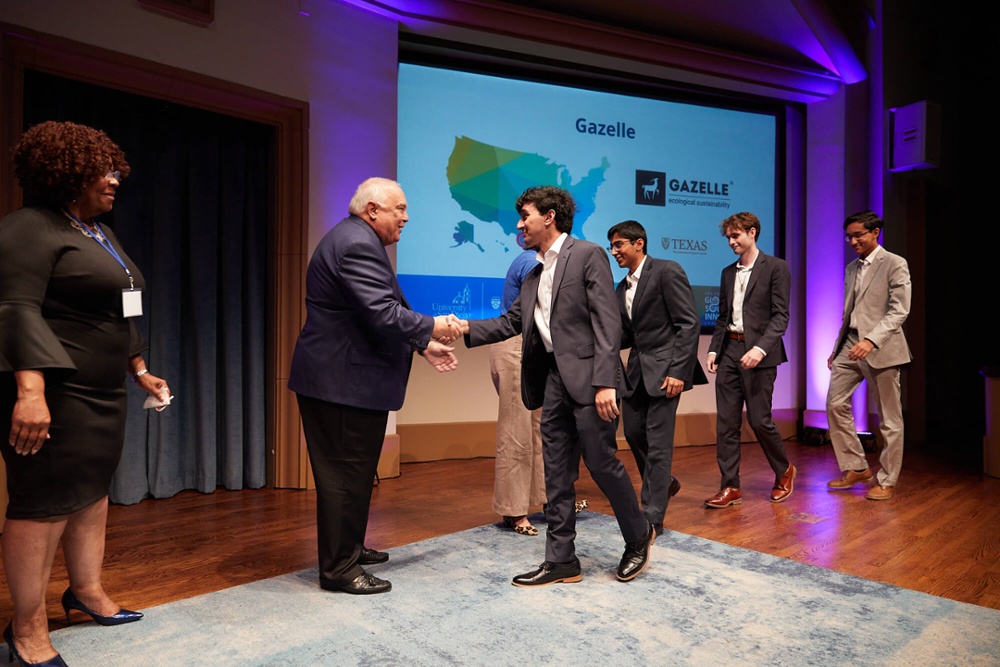

When I boarded the plane to Argentina, I didn’t know this practicum would become one of my most powerful and transformative chapters in my academic and personal life. Over just 8 days, I was immersed in Argentina’s historical wounds, joyful resistance, and deeply relational culture. What unfolded was more than a course. It was a journey into the heart of memory, justice, and human connection.

Plaza San Martin
Walking Into History
Our first day began with a walking tour led by Natale Antonel, a local expert in inclusion and culture. He reminded us that architecture isn’t just buildings—it’s living memory. Córdoba's streets whispered stories of repression and resilience.
Later, in a cozy community center, Proyecto Cultural “Miradas del Sur” welcomed us to reflect on our assumptions and expectations. Throughout our visit, we received consistent support from Victor, Pablo, Dardo, and Lara, who were there for us on multiple occasions and played a key role in making our experience smooth and enriching. We closed the night with a community dance—Chacarera—which grounded us in local tradition while allowing connection through movement. It reminded me how important it is to integrate joy, art, and embodied learning into peacebuilding work as a way of somatic therapy.
And of course, the asado. It wasn’t just dinner, it was a connection. I understood then that in Argentina, meals are more than food; they’re rituals of belonging.
From Storytelling to Community Resilience

Kroc School Students had the privilege of meeting Padre Mariano Overlin in el barrio Müller de Córdoba.
Meeting Padre Mariano Oberlin was like encountering a living example of trauma-informed care and restorative practices in action. He shared how his work with communities facing poverty and addiction is centered on trust, education, and compassion. Padre Oberlin's programs are wide-ranging and deeply responsive: from rehabilitation and housing support to welding, music, and skating workshops. These efforts not only offer concrete tools for rebuilding lives but also cultivate dignity, agency, and joy. He taught us the difference between proposing support and imposing solutions.

Kroc School Students were warmly welcomed by the Brisas de Esperanza cooperative.
Later, we heard stories of transformation and healing at Brisas de Esperanza, a women-led textile cooperative that supports women, LGBTQ+ individuals, and others overcoming cycles of violence and addiction. The visit included a powerful storytelling session where cooperative members shared how the program had transformed their lives. They spoke about the ongoing efforts to diversify the workshops, ensuring that each participant has the opportunity to engage in activities aligned with their interests and passions, ultimately supporting their journey toward independence and financial stability.
Memory Is Resistance
La Perla, a former clandestine detention center used during the military dictatorship (1976–1983), is now a space of collective memory. Walking through the site, now a memory space, was deeply emotional. The pain held in those walls was palpable, yet so was the courage of those who continue to fight for justice and remembrance. I reflected on how honoring memory is itself a form of resistance, a way to ensure that silence and denial never win.

Kroc School Student Lucy O'Brien (MAPJ) taking notes during the visit to La Perla.
We also learned about ongoing human rights efforts in Argentina, including the powerful role of the Mothers and Grandmothers of Plaza de Mayo, and the Marea Verde movement advocating for women’s rights and reproductive justice. These moments offered a multigenerational view of organizing and the continued relevance of collective action.
After that, we visited La Casa del Che Guevara. It was fascinating to hear everyone in the group share their perspectives and insights about him and to learn more about his life through the museum. What stood out to me was how our understanding of Che Guevara evolved; some of us came in with different preconceived notions, and by the end of the visit, we could reflect on how our views had shifted or deepened. It was a meaningful moment of shared learning and respectful dialogue.
That evening, we stumbled into a Zamba workshop, completely unprepared but open to the experience. Although unexpected, the experience turned out to be incredible. Through the dance, we connected with new people joyfully and meaningfully. Afterward, we shared food, laughter, and a deep sense of community.
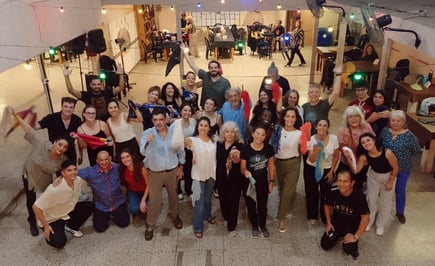
Kroc Students posing post Zamba workshop.
Youth, Justice, and Belonging
The Abuelas de Plaza de Mayo taught me that the right to identity is a human right. Hearing a granddaughter of the disappeared share her story was profoundly humbling. Her strength embodied decades of collective perseverance, reminding us that identity is more than just a name or a family; it is tied to memory, justice, truth, and healing.
Group photo following the conversation hosted by Las Abuelas de Plaza de Mayo
Through tireless advocacy, legal action, and genetic testing, they have successfully reunited over 130 individuals with their biological families.
That same day, we visited the Instituto Hijas de María Inmaculada, where we met and engaged with high school students. Divided into small groups, we exchanged perspectives and learned from one another. In my group, we shared about restorative justice, and the students surprised us with their awareness and involvement in the democratic process. We learned that in Argentina, young people can vote starting at age 16, and voting becomes mandatory at 18, with potential fines for not participating. Seeing how engaged and informed they are about their civic responsibilities from such a young age was inspiring.
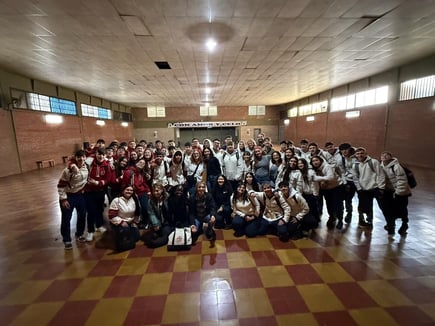
Kroc School graduate students pictured with high School students of the Instituto Hijas de María Inmaculada.
We concluded the day with a lecture at the Catholic University of Córdoba, where each of us had the opportunity to share our personal interests and experiences with local political science students. Professor Martín Maldonado skillfully connected our reflections to relevant organizations, historical events, and social dynamics in Argentina, helping us see how our passions align with the local context.

The Catholic University of Córdoba's International Relations students hosted our Kroc students to discuss the local socio-political landscape of Argentina
Local Voices, Global Conversations: A Day with Mediators and the International Colloquium.
We visited a local organization focused on community mediation, where we learned about their mediation practices, observed real-life case examples, and reflected on their successes and areas for growth.
Later that day, we attended the “International Colloquium on Social Policies and Human Rights,” hosted by the Universidad Nacional de Córdoba (UNC). Several USD students presented their research interests and projects, and master's students from UNC presented an introduction to their thesis work. It was gratifying to present and listen to such a wide range of thoughtful and impactful topics.

Kroc School students participated in the International Colloquium on Social Policies & Human Rights
After the colloquium, we all gathered for an asado prepared by the Cordobeses Master students, with help from some of our USD peers. It was a beautiful way to end the day, sharing food, laughter, and meaningful conversation while fully immersed in one of the most authentic and cherished Argentine traditions.
Final Day: Listening to the Other Side
On our last day, we met with Rodrigo Agrelo, a provincial legislator, he shared his perspective on the history of Argentina’s dictatorship, a version that, for many of us, differed from the narratives we had previously heard from other people and organizations.
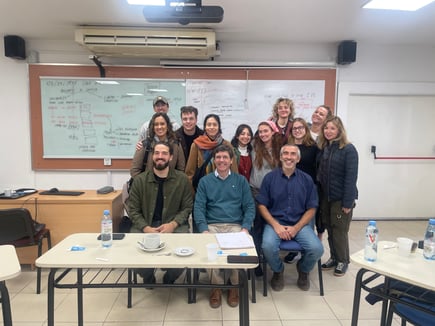
Kroc School students pictured with provincial legislator, Rodrigo Agrelo
Hearing this alternative viewpoint was significant to me. It reminded me of the importance of holding space for multiple narratives, questioning them critically, and staying curious about how history is shaped, taught, and understood. As a peacebuilder, I believe truly listening to different sides is essential for building deeper understanding and reconciliation.
We also met with a representative from the Jesuit Migrant Service. His stories mirrored the fears, hopes, and courage I’ve heard in migration contexts across the Americas. Our conversation reminded me that borders may change, but the humanity of migration—the trauma, the strength—is shared.
We closed our practicum with a Despedida at La Luciérnaga, a local non-profit organization. What made this event so impactful wasn’t just the opportunity to dance to folkloric music and enjoy a traditional meal, but the spirit of unity and joy that filled the space.
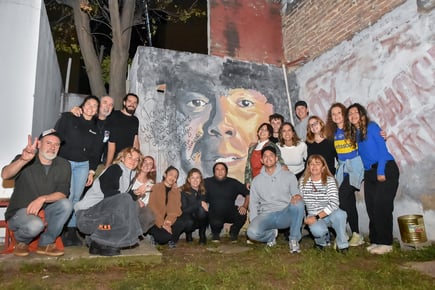
La Despedida at La Luciernaga
Despite differing political views, social contexts, and backgrounds, people came together not to debate, but to connect. In Argentina, activism is often infused with celebration and collective presence. That night, individuals with diverse perspectives gathered to share food, dance, and community, demonstrating that joy can be a powerful form of resistance and that being fully present with others is a meaningful act of solidarity.
What I Carry Forward
I arrived thinking I was just wrapping up my master’s program. Instead, I left with a deepened connection to Latin America, and to myself. I had never engaged with other Latin American countries as I did during this practicum. For a long time, I felt distant. This experience healed that distance.
In addition, a cultural insight that surprised many of us was how Argentinians relate to time. Punctuality isn't a strong expectation, yet time can be redefined, and being present matters more than being “on time.”They don’t need to plan gatherings a week in advance; they say yes in the moment, and it works.
Listening deeply, dancing spontaneously, and sharing a mate can be tools of peace. MS-CMR student Jared Fontenette beautifully summarized it in two powerful sentences: “Joy in their social movements, joy as an element of resistance.”
Argentina is fútbol, merlot, folklore, alfajores. It’s people who live boldly—"black or white," as they say—with conviction and warmth. It's a culture where presence matters more than punctuality.
Argentina reminded me why I chose this path: peace begins with presence, and community is everything.