
-1.jpeg)
Ali Smith of Inverness, Scotland has authored 10 books, and her research has given her plenty to say about the state of the world. Like so many today, she’s tired:
“I'm tired of the news. I'm tired of the way it makes things spectacular that aren’t and deals so simplistically with what's truly appalling. I'm tired of the vitriol. I'm tired of anger. I'm tired of the meanness. I'm tired of selfishness. I'm tired of being made to feel this fearful.”
In many ways, Ali’s perspective mirrors the findings of the Institute for Economics & Peace (IEP), an independent, non-partisan, non-profit think tank dedicated to shifting the world’s focus to peace as a positive, achievable, and tangible measure of human well-being and progress. The IEP’s Global Peace Index (GPI) tracks 23 indicators to measure peace globally. While 2021 saw significant deterioration due to the pandemic, the landscape of 2026 shows that the gap between the most and least peaceful nations remains a critical challenge for global stability.
According to the 2025-2026 Global Peace Index trends:
- The economic impact of violence remains a multi-trillion dollar drain on the global economy.
- Ecological threats and climate-induced displacement have become primary drivers of conflict in sub-Saharan Africa and South Asia.
- Technological warfare and misinformation are now top-tier indicators in assessing a nation's "Positive Peace" score.

Why is Peacebuilding More Critical in 2026 Than Ever Before?
Studying the IEP report makes it overwhelmingly clear: peace is fragile. In the mid-2020s, the rise of "polycrisis" — the intersection of climate change, political polarization, and economic shifts — has created an urgent demand for skilled peacebuilders.
For example, while cartel violence in Mexico remains a complex challenge, new models of community-led restorative justice are providing blueprints for regional stability. Similarly, the ongoing humanitarian evolution in Venezuela and the resulting migration patterns across the Americas require practitioners who understand both high-level policy and on-the-ground human rights advocacy.
These and other events around the world remind us that modern peacebuilding is more about stopping war; it’s about building resilient systems thatalleviate some of the long-term suffering of humanity.
The Importance of Theory and Applied Practice When it Comes to Peace Work
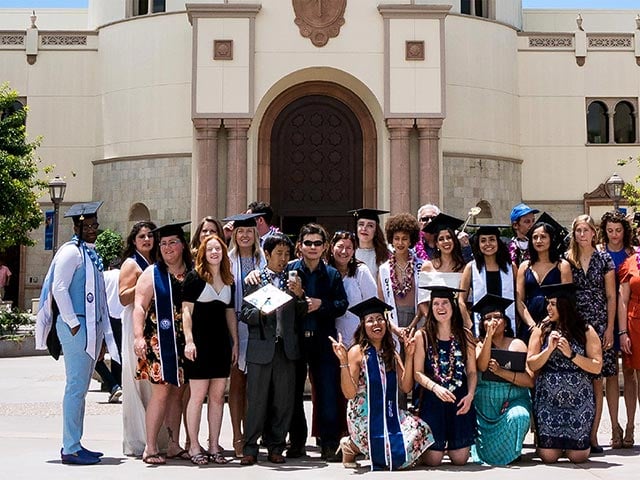
Educators know that theoretical knowledge and practical knowledge are equally important and relevant when learning a new subject. That’s why the Kroc School’s MA in Peace and Justice (MAPJ) has become a flagship program at the University of San Diego. In a world of "AI-generated answers," the human element of experiential learning is what sets our graduates apart.
Ocourses combine theory and practice — we prioritize hands-on experience because we recognize that some insights and skills can only be acquired through action. And, as practitioners of peace themselves, our faculty members draw from firsthand experience when they speak to the most effective approaches for shaping more peaceful and just societies.
Experiential Learning: From the Classroom to the Global Stage
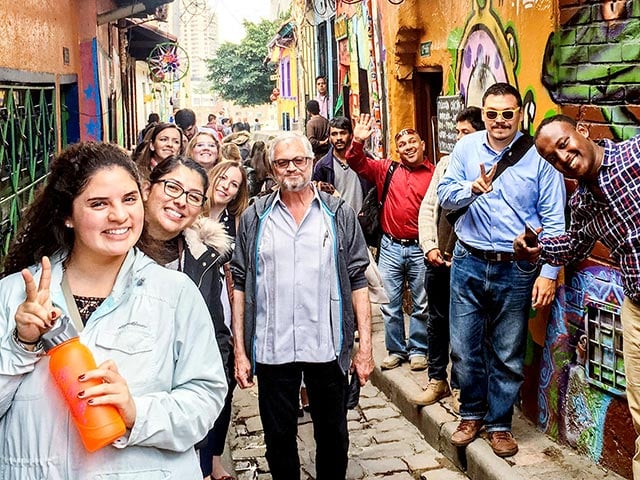
The Kroc School offers field-based courses in locations such as Mexico, Colombia, and Rwanda. These immersions allow students to study post-conflict reconstruction, forced displacement, and social reconciliation firsthand.
- 250-Hour Internship: Every MAPJ student completes a professional placement to build a career-ready portfolio.
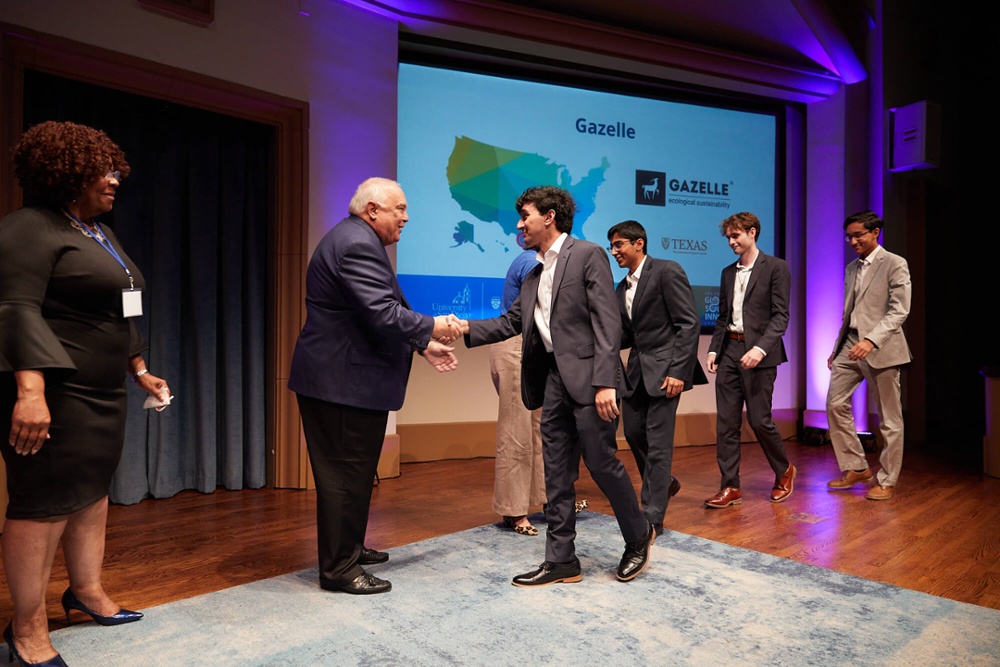
- Fowler Global Social Innovation Challenge: Students can pitch social ventures for a chance to earn up to $25,000 in seed funding to turn a peacebuilding idea into a sustainable business.
Essential Traits and Skills for Modern Peacebuilders
The Inherent Qualities of a Change-Maker
Grounded and Human-Centered — High emotional intelligence (EQ) is non-negotiable. Peacebuilders respond to individuals with dignity, empathy, and a social-justice-oriented mindset.
Transformation Driven — You must be an innovative problem-solver committed to challenging the status quo and dismantling systemic injustice.
Persistent & Resilient — Peace work is a marathon. It requires a normative commitment to progress, even when it feels slow.
Cultural Humility — A lifelong thirst for learning and "unlearning" destructive systems is essential to avoid doing harm in diverse communities.
Collaborative Leadership — Peacebuilding is a collective effort. Success depends on active listening and the ability to thrive in diverse team environments.
Technical Peace Skills the Kroc School
To turn passion into a career in 2026, you need a specific toolkit:
Human & Leadership Skills — Central to a peacebuilder’s work are leadership skills like relationship building, community organizing, team building, visioning, and the ability to maintain a calm and low-stress demeanor without becoming passive. While specific peace and justice issues that one focuses on may change over time, these skills are required in any peacebuilding and human rights context, be it environmental justice, human trafficking prevention, or racial justice.
Analytical Skills — All peacebuilders must have sound analytical skills, including but not limited to conflict analysis, conflict mapping, policy analysis, and strategic planning. To redress grievances and promote peace, professionals also need an in-depth understanding of the root causes of violence, oppression, and injustice so they can apply impactful peacebuilding strategies to address them. Practitioners must be able to analyze the proximate and latent causes of the problem and present a strategic solution.
Program Design & Management Skills — Peace and justice workers must have the skills to design, monitor, and evaluate peacebuilding programs. Doing research and partnering with experts with firsthand experience of the issues are key steps in understanding the right problems and ideating viable, human-centered solutions to address them. With a firm grasp of the problem and a potential solution in mind, peacebuilders may then move on to design, test, implement, monitor, and evaluate the new policy, social service, or program. After the pilot phase, the innovators must critically evaluate the impact and make further modifications to improve outcomes in the long run.
Fundraising Skills — Those working for peace and justice in nongovernmental organizations (NGOs) and nonprofits will often need to fundraise to bring their visions to life. In the hands of a competent fundraiser, an organization can take a promising idea and transform it into an effective and impactful program. Without an understanding of fundraising, professionals with innovative and ingenious solutions may not be able to implement their ideas.
Frequently Asked Questions for Peace and Justice Studies
What is the difference between "Peace Studies" and "Conflict Resolution"?
While conflict resolution focuses on ending an active dispute, Peace and Justice studies examine the "Positive Peace" framework, addressing the underlying systemic issues (poverty, inequality, lack of education) to prevent conflict from arising in the first place.
Can I get a job with a Master’s in Peace and Justice?
Yes. Graduates in 2026 work in government agencies, international NGOs, corporate social responsibility (CSR) departments, and as independent mediators. The analytical and leadership skills provided by the MAPJ are highly transferable to any leadership role.
Is peacebuilding a growing field?
Absolutely. With the rise of global climate migration and domestic political polarization, the demand for "Conflict Transformation" specialists and "DEI" (Diversity, Equity, and Inclusion) experts has increased by over 20% in the last five years.
How does the Kroc School handle field study?
We offer curated, faculty-led immersions in regions like Rwanda and the US-Mexico border, where students work alongside local practitioners to see how theory is applied in real-time.
Leading the Charge for Global Change
In 2026, the call for courageous changemakers is louder than ever. As we navigate a global landscape defined by complex security challenges, environmental shifts, and the need for deep-rooted restorative justice, the work of peacebuilding has moved from the sidelines to the center of global strategy.
Through the MA in Peace and Justice (MAPJ), we empower a new generation of scholar-practitioners to transition from "feeling tired" of the state of the world to actively transforming it. Whether you are looking to influence international policy, lead a social innovation startup, or facilitate healing in post-conflict communities, the skills and hands-on experience you gain here are the catalysts for a career of purpose.
Learn more by accessing our resource —